Lifestyle Hydration Drip
Complementary supportive care, delivered with full screening and oncologist coordination
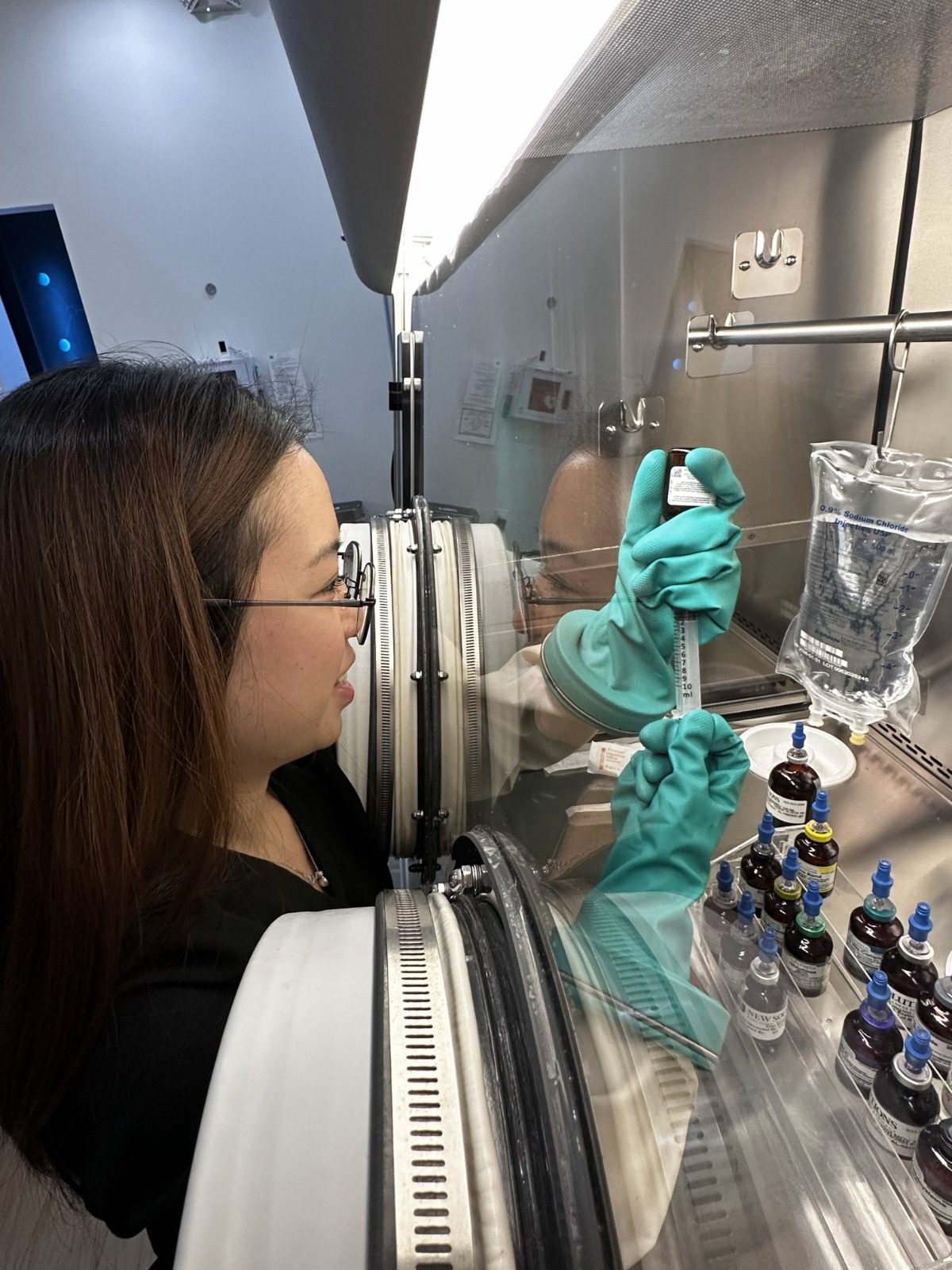
High-dose intravenous vitamin C is one of the most studied and most misrepresented services in this field. We offer it as complementary supportive care, alongside — never instead of — conventional medical care, and only after labs and a physician or nurse practitioner consultation. Here is what the research actually says.
Featured ingredients
Available at 15g ($199), 25g ($239), 50g ($289), 75g ($319) and 100g ($339). Laboratory work and a doctor or nurse practitioner consultation are required before your first infusion — this is not optional and it is for your safety.
At a glance
A plain description of what is in the bag and what happens while you are here.
The IV route reaches plasma concentrations that oral dosing physically cannot.
G6PD status, renal function and stone history are checked before your first infusion.
Required before you begin, and the right place to discuss coordination with your oncology team.
So the program can start conservatively and be adjusted clinically.
The science
We would rather tell you where the evidence is strong, where it is thin, and where it simply does not exist yet.
Oral vitamin C is tightly regulated by intestinal absorption and renal excretion, with plasma concentrations capped below roughly 300 micromol/L; above 1 g/day oral absorption falls below 50%. Intravenous administration bypasses this. The National Cancer Institute's PDQ summary reports concentrations up to 20 mmol/L — roughly a 60-fold difference, sustained for several hours.
At pharmacologic rather than nutritional levels, ascorbate acts as a pro-oxidant, generating extracellular hydrogen peroxide. Preclinical work implicates labile iron and hydrogen peroxide in selective effects on some cell types. This is a laboratory mechanism.
Clinical work is confined to small phase I and phase II trials. NCI PDQ explicitly states these studies have several limitations due to lack of rigour in trial design. Some reported improved quality of life and reduced chemotherapy-related toxicity. No phase III efficacy has been established, and IV vitamin C is not FDA-approved for any oncology indication. It is not a cancer treatment, and we will not present it as one.
A scoping review of 74 studies covering 2,801 patients at a median 22.5 g/day found adverse event rates comparable to placebo across nine double-blind randomised trials, while cataloguing rare serious events — which is precisely why we screen.
Who commonly considers this: People exploring complementary supportive options, most often in coordination with an oncology team, and anyone interested in high-dose vitamin C who is willing to complete the screening protocol.
This button goes straight to the live calendar for this treatment — real availability, updated as appointments are taken. Prefer to talk it through first? Call us.
Visit us
The DRIPBaR Frisco
3311 Preston Rd, Ste 9, Frisco, Texas 75034
Tel: 469-466-1134
Zen Health PLLC · Physician: Dr. Aminidhan D. Thakkar, MD